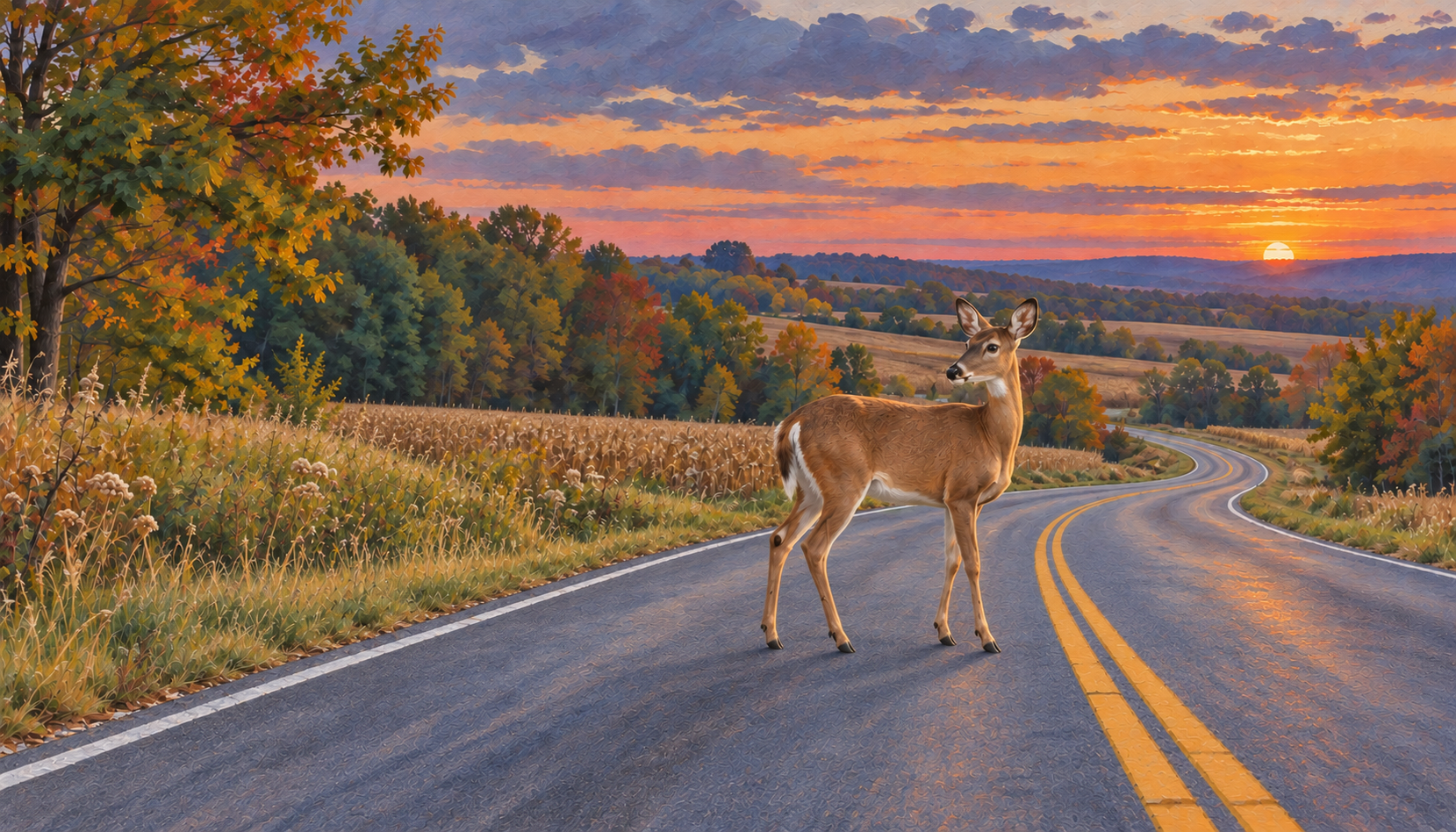
The drive home may be familiar, but the edge of the road deserves another look this time of year. A deer standing near a fence can move into your lane without much warning. If one crosses, another may follow.
Before October arrives, it is worth checking what your auto policy would cover if that happened to you.
Why fall deserves extra attention
The Missouri Department of Transportation identifies October and November as peak months for deer movement. Deer are especially active at dawn and dusk, when many people are heading to work or driving home.
In an October 2025 safety reminder, MoDOT reported 2,952 deer crashes statewide during 2024, including four deaths and 420 injuries.
A September 15, 2026 report from State Farm estimates more than 1.6 million animal-vehicle collision claims nationwide from July 2025 through June 2026. That includes animals other than deer. National collision likelihood actually improved from the year before, but the fall risk is still worth taking seriously.
Does insurance cover hitting a deer?
Damage from directly hitting a deer is typically handled under comprehensive coverage, subject to your policy terms and deductible. Missouri's insurance department explains that comprehensive is a different coverage from collision, despite the everyday use of the word “collision” to describe hitting an animal.
Having an auto policy does not necessarily mean you carry comprehensive coverage on every vehicle. Liability coverage alone generally does not pay to repair your own vehicle after a deer strike.
Check the coverage for the vehicle you actually drive. An older pickup and a newer family car may have different protections and different deductibles.
Start with your declarations page. Look for “comprehensive” or “other than collision.” If the wording is unclear, ask an agent to review it with you.
What would your deductible mean?
The deductible is the amount you are responsible for on a covered claim. Ask what your comprehensive deductible is and whether you would be comfortable paying that amount after an unexpected repair.
Do not assume it matches the collision deductible. And if you have removed or reduced coverage on an older vehicle, check what remains before you need it.
Slow down at dawn and dusk
MoDOT advises drivers to control their speed, stay alert and avoid distractions. Wear your seat belt and leave room behind the vehicle ahead. That driver may need to stop suddenly for a deer you have not seen.
If you see one deer, slow down and look for others. Deer often travel together, and one that seems settled beside the road can still step into traffic.
Do not swerve to avoid a deer. MoDOT warns that a sudden swerve can send a vehicle off the road or into oncoming traffic. Staying in control matters more than making a sharp last-second move.
If you hit a deer
Check for injuries first. Move out of traffic if you can do so safely, use your hazard lights and call 911 if anyone is hurt or there is an immediate danger.
Do not approach an injured deer. If the animal is creating a road hazard, report it to the appropriate authorities.
When it is safe, photograph the damage and note the location. Before driving away, check for leaking fluids, damaged tires, broken lights or other signs that the vehicle may not be safe to drive. Contact your insurer for claim instructions; our claims and policy service guide can help you find the next step. If the vehicle seems unsafe, arrange help rather than trying to get it home.
Ask before you need to file a claim
You do not need to wait for a renewal notice to ask about your coverage. A short conversation can clear up whether your vehicle has comprehensive coverage, what deductible applies and whom to call after a crash.
Call Black Insurance Group, LLC in Marceline at (660) 376-4200 for help reviewing your policy. The agency serves customers throughout Missouri, so you can start with a phone call.