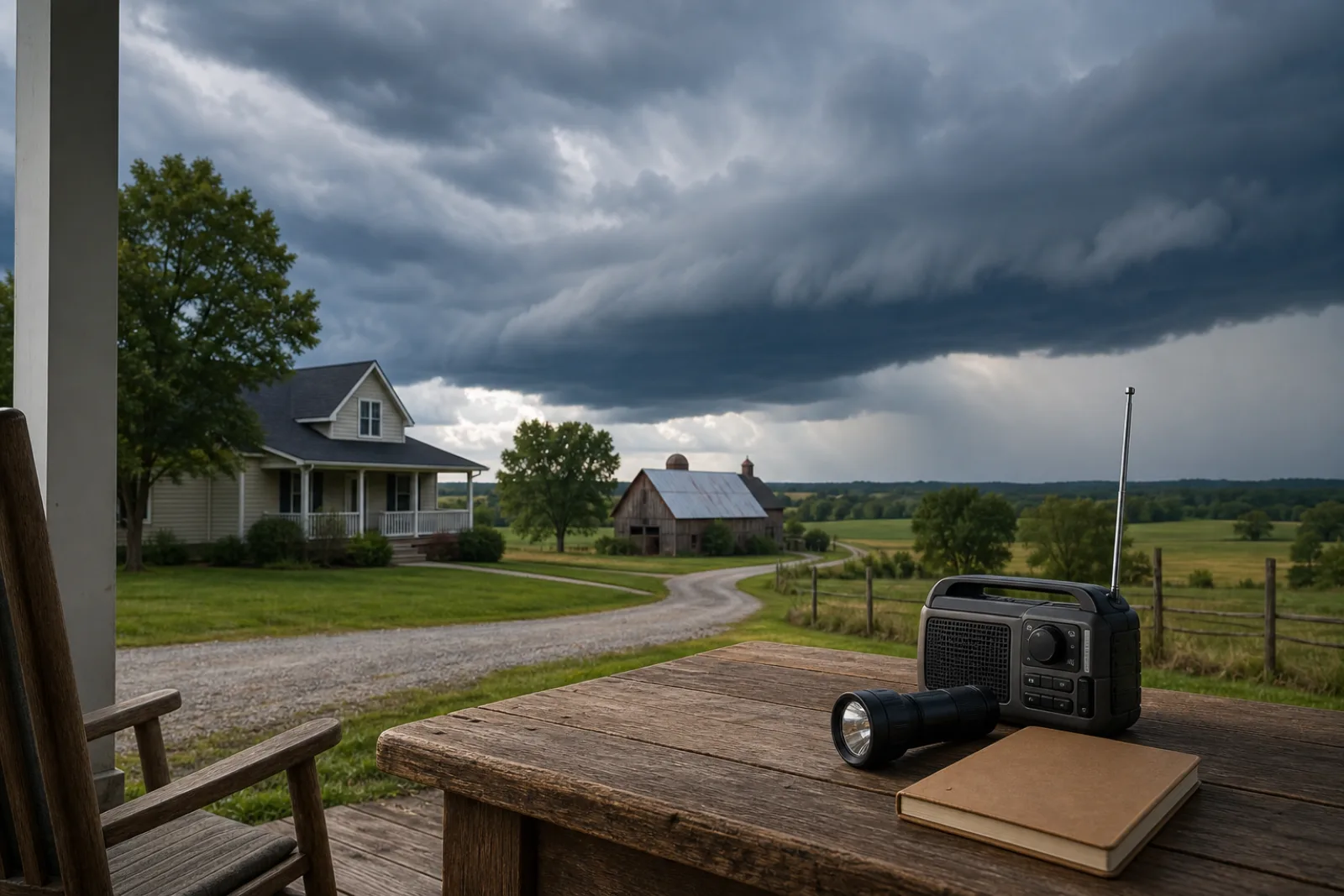
The short answer: Marceline-area households, farms, and businesses should review replacement values, deductibles, roof terms, flood gaps, equipment and vehicle lists, and property documentation before severe weather. Every policy is different, so confirm the details directly with an agent.
Why premiums and deductibles feel different right now
Insurance prices and renewal terms can move for many reasons: the claims history of a region, the cost of labor and materials, the age and condition of property, the coverage selected, and the insurer’s current underwriting rules. A higher bill does not have one universal explanation, and a lower premium is not automatically the better fit.
The scale of recent Missouri losses provides useful context. In June 2026, the Missouri Department of Commerce and Insurance reported that insurers had received more than 253,000 catastrophic home, renters, condo, and auto claims tied to the 2025 severe-weather season and had paid more than $2.9 billion statewide. Residential property accounted for most of those payments. That does not predict any one customer’s renewal, but it helps explain why weather risk is receiving so much attention.
Repair costs matter too. The National Association of Insurance Commissioners notes that construction costs vary with building materials, local climate, and building rules. If the estimated cost to rebuild or repair has changed, the amount of insurance that made sense several years ago may deserve another look.
What homeowners should review
- Dwelling limit: Is the estimated rebuilding amount still realistic after renovations or local cost changes?
- Deductibles: Is there one deductible for most losses and a different wind, hail, or roof deductible?
- Roof settlement: Does the policy use replacement cost, actual cash value, depreciation, or a separate roof schedule?
- Water gaps: Standard homeowners policies generally do not cover flooding. Ask separately about flood, sewer backup, and surface-water questions.
- Other structures and belongings: Do sheds, detached garages, tools, jewelry, collections, and recent purchases fit within the current limits?
Missouri DCI specifically advises residents to check deductibles at renewal because they can change and because different losses may carry separate deductibles. The department also reminds consumers that flood and earthquake damage are generally not included in standard homeowners coverage.
What farm and rural property owners should review
Rural property often blends home, land, equipment, storage, vehicles, animals, and business activity. Start with a simple walk-through of the operation rather than assuming last year’s schedule still tells the whole story.
- List new buildings, grain storage, fencing, irrigation, livestock facilities, and major repairs.
- Update tractors, implements, trailers, portable tools, and replacement values.
- Note changes in acreage, tenants, custom work, roadside sales, agritourism, or other income-producing activity.
- Ask how power interruption, debris removal, temporary repairs, and equipment breakdown are handled.
- Separate personal vehicles and property from farm or commercial use when explaining the operation.
These questions do not assume a particular product is available. They help an agent understand the risk and identify what needs to be confirmed with the carriers the agency works with.
What small businesses should review
A storm can affect more than a building. It can interrupt work, damage tools or inventory, take vehicles off the road, and create extra expenses while a business recovers.
- Confirm current building, contents, inventory, equipment, and signage values.
- Review business-income and extra-expense terms, waiting periods, and covered causes of loss.
- Update commercial vehicles, trailers, mobile equipment, and where they are normally stored.
- Check whether important records and customer information are backed up securely away from the premises.
- Share new services, locations, payroll, ownership, or contract requirements before renewal.
What to document before bad weather
A home or business inventory is easier to create before a loss. Walk through rooms, buildings, and equipment areas with a camera. Record model and serial numbers for higher-value items, keep purchase records where practical, and store copies somewhere you can reach even if the property is inaccessible.
Missouri DCI recommends documenting damage with photos before temporary repairs, keeping receipts for emergency work, and contacting the insurer promptly after a loss. Before the storm, the same habit makes the process easier: know where the policy, agent number, carrier claims number, and property inventory are kept.
When to call the local office
Call before renewal when property values, vehicles, drivers, equipment, buildings, business activity, or family responsibilities have changed. Call promptly after a loss once everyone is safe and reasonable steps have been taken to prevent more damage.
It is also fine to call because a deductible, exclusion, roof provision, or coverage label is confusing. The point of a local agent is to have a real conversation before the wording becomes urgent.
Sources and article notes
- Missouri Department of Commerce and Insurance: more than $2.9 billion in claims paid after the 2025 severe-weather season, published June 4, 2026.
- Missouri DCI severe-weather guidance for consumers, published April 20, 2026.
- NAIC Homeowners Insurance Report, including context on factors affecting insurance costs and construction costs.
- NAIC nationwide homeowners market data call, describing regulators’ work to understand affordability, availability, and market conditions.
Source facts were summarized in plain language. No source determines coverage for an individual policy or claim.