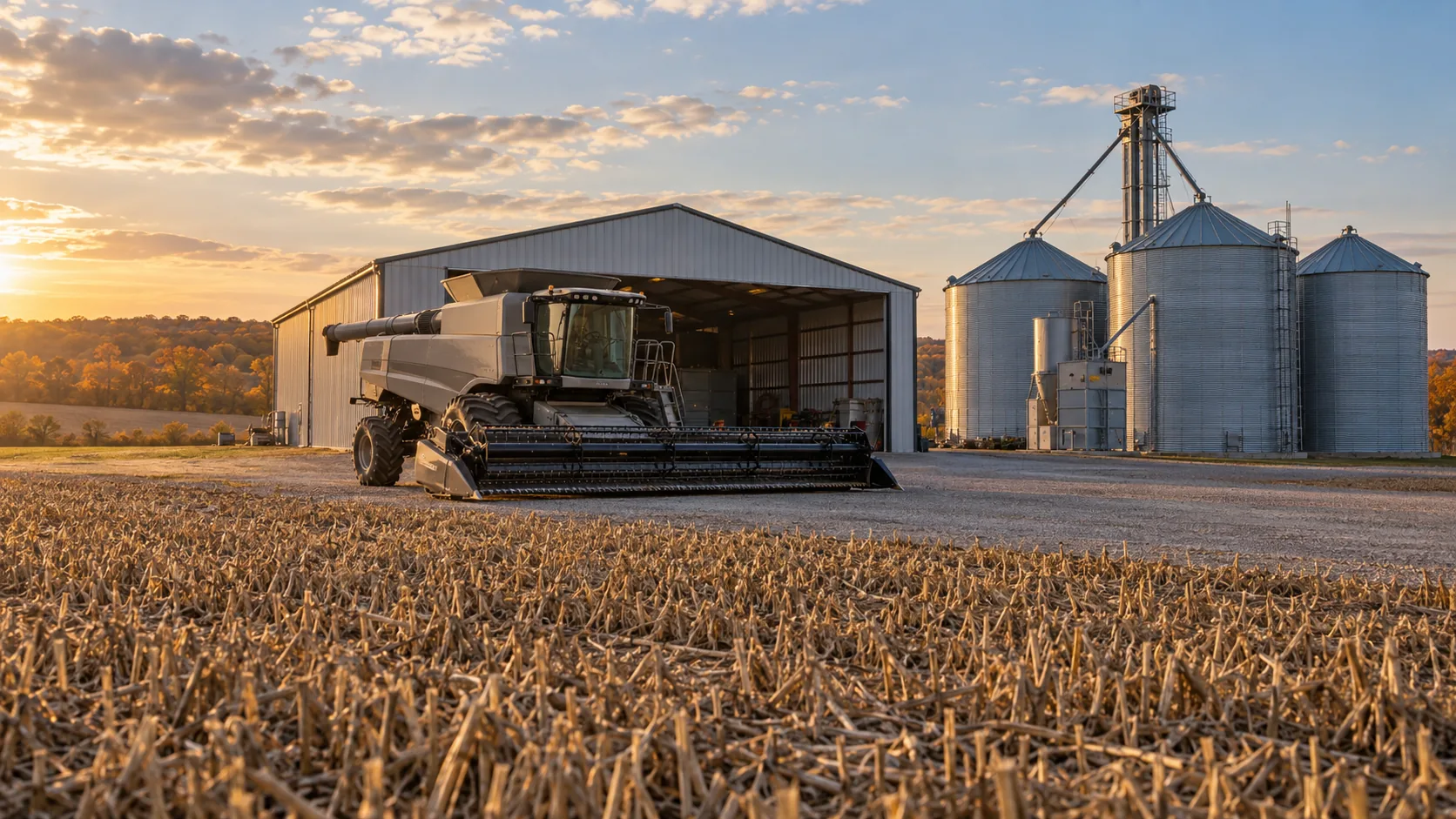
Somewhere between the first load of beans and the last load of corn, the farm changed again. Maybe the combine in the shed isn’t the one you had at renewal. Maybe there’s a new header on the trailer, or the machine shed you started in April finally has a door on it. And the bins that sat half-empty all summer are filling up fast.
You’ve been working around those changes every day. Your policy paperwork may not have heard about any of them.
So a good fall review starts with one plain question: What’s changed since we last talked?
Bring that answer to a conversation about your farm and ranch coverage. You don’t need a perfect inventory before you call. A list on the back of a seed invoice is a fine place to start.
Does the equipment list match what’s in the shed?
Pull out your policy documents and compare the machinery listed there with what you actually run. Count the purchases, the trades, the attachments, and anything that belongs to somebody else.
Have these questions ready:
- Is the replacement combine listed correctly, and is the traded one off the list?
- How are rented, leased, or borrowed machines handled?
- Are major attachments identified, including headers and other equipment used with the main machine?
- Does coverage apply where the equipment actually goes, including other farms and the road between them?
- If you buy something during the policy term, what do you report, and how soon?
Some property is listed item by item. Some shares a blanket limit. Purdue Extension’s farm insurance overview explains why the way property is listed and valued matters. Ask which way your policy works and whether there are item limits or insurance-to-value requirements.
Ask, too, how the policy treats a fire, an overturn, and a mechanical breakdown. Three different events. The policy may answer each one differently. Get the deductible and any exclusions explained in plain words.
Have the buildings or grain systems changed?
A new shed is an obvious reason to call. So is an addition, an old building put to a new use, or upgrades to the grain-handling system.
List the structures, where they sit, and any recent work. Ask whether each building is insured, what limit applies, and how a covered loss would be valued. Replacement cost and actual cash value settle a loss differently, and depreciation can matter. Penn State Extension’s agricultural insurance guide explains those choices.
For bins, dryers, and related equipment, ask which items fall under building coverage and which fall under equipment coverage. Then ask about the grain inside, separately. Knowing the bin is insured doesn’t tell you much about what’s in it.
Our Missouri storm-season guide has more questions about deductibles, documentation, and rural property changes.
Will stored-grain limits hold up in your busiest weeks?
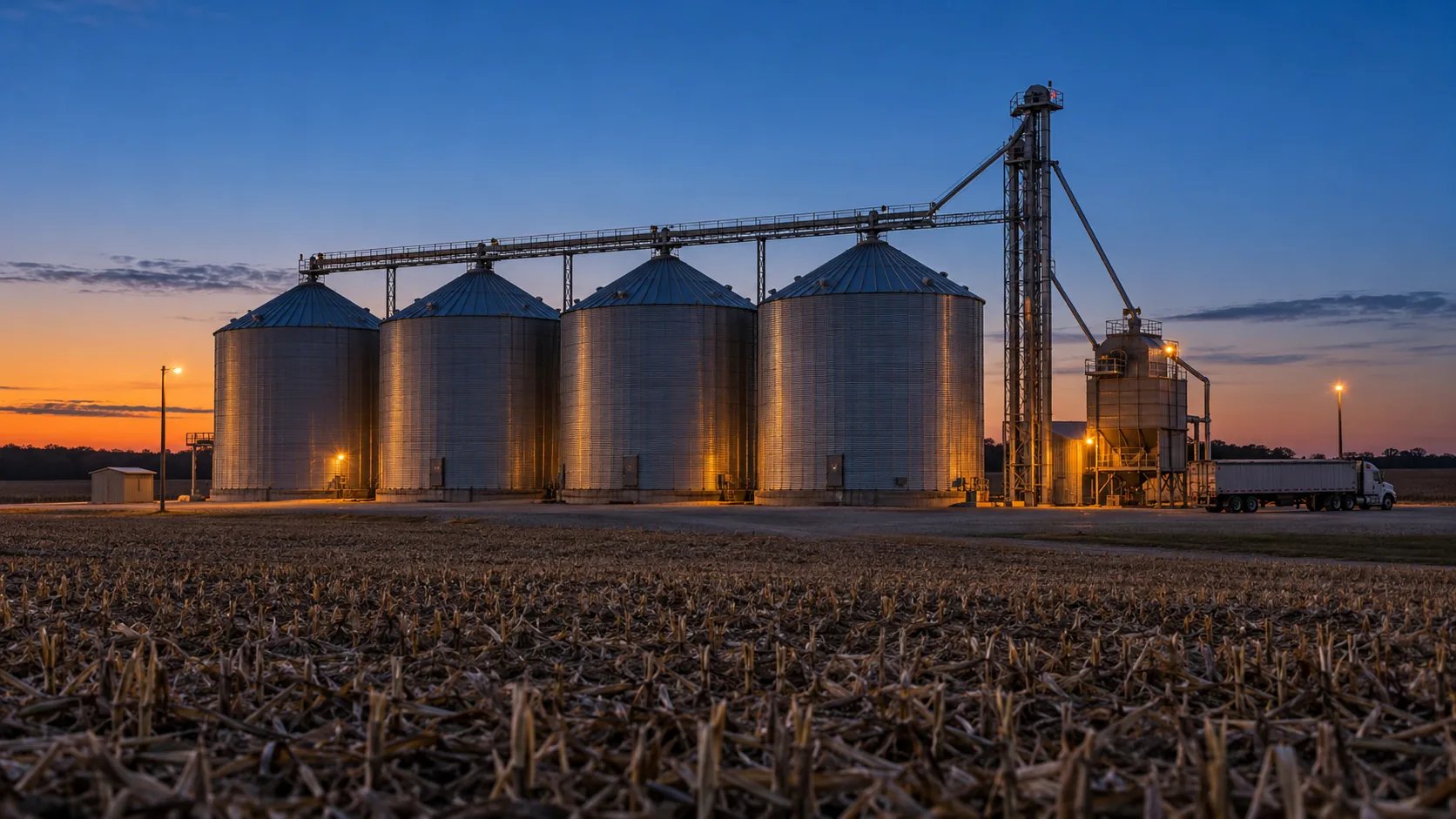
In August, there’s room in the bins. By November, maybe not.
The value of grain on the farm can swing a long way during harvest. Tell your agent what you expect to store, where it will be, and about how long it will stay there.
Ask about:
- The most value likely to be stored at one time
- Limits at each location, and any shared overall limit
- Grain in rented bins, temporary storage, or other off-farm locations
- Who owns the grain, and who’s responsible for insuring it
- How grain is valued after a covered loss
Penn State Extension’s discussion of peak-season coverage describes endorsements built for periods of higher inventory. Ask whether a seasonal increase or another adjustment is available for your operation, and confirm its dates and limits.
A simple storage swing
Estimated value of grain stored on one hypothetical farm
$80,000 change to talk through
Say a farm usually has about $60,000 of grain in storage but expects that to reach $140,000 after harvest. That’s an $80,000 change worth a phone call.
Crop insurance and stored grain are separate questions
Federal crop insurance and farm property insurance address different risks. Under USDA’s Common Crop Insurance Policy Basic Provisions, harvest is one of the events that can end the insurance period. Those provisions exclude damage after that period, including damage to harvested production in storage.
Confirm your crop policy’s terms with your crop insurance agent. Ask separately about property coverage for grain after harvest. Don’t assume the crop policy will pay for a storage loss in January.
Has the work changed along with the equipment?
Tell your agent if you’ve added acres, started custom harvesting or hauling, hired seasonal help, changed ownership, or started storing property for someone else. Mention the occasional paid job too. Yes, even the one for your brother-in-law.
University of Missouri Extension’s farm liability guide, revised in March 2026, recommends a yearly review and reporting changes in your operation during the policy term. It also flags questions about seasonal workers, contractors, and activities that may be excluded.
Explain who does the work, whose equipment they use, and where it happens. Ask about liability for injury or damage to others, and separately about injuries to workers. Those questions can involve different coverage.
Here’s how it stacks up. A hypothetical farm near Marceline buys a used combine, borrows a neighbor’s grain cart, and agrees to harvest that neighbor’s beans for a fee. That’s three things to talk about: the new machine, the borrowed cart, and the paid work. Update only the combine’s value, and two of those questions are still sitting there.
A word about grain bins
In a September 11, 2026 article, MU Extension urged farms to review grain-bin safety with family members and workers, including seasonal help. Flowing grain, unstable grain, and running equipment can kill.
So here’s the one rule for this review: don’t go into a bin to get a number or a photo for your insurance. Use your records and safe, ground-level pictures. Bin entry takes proper training and safeguards, and having someone standing nearby isn’t enough on its own. In an emergency, call 911. Don’t attempt an untrained rescue.
No insurance review is worth that.
What to have ready for the call
Your current policy and a short list of what’s changed. If you have them handy, add purchase records, machinery details, building information, storage locations, and your best estimate of peak grain value.
Then add the questions that have been bugging you. A deductible that doesn’t make sense. A coverage label you’ve never seen before. That borrowed grain cart. You can also use our claims and policy service page to plan whom to contact if a loss happens.
Call the office before sharing documents. Please don’t email policy numbers, claim details, or other sensitive information.
Start with what’s different
The farm doesn’t hold still between renewals. The paperwork has to catch up somehow.
Call Black Insurance Group, LLC at (660) 376-4200 and tell us what’s changed this year, or contact the agency here. We’re at 115 E Howell Ave in Marceline and serve customers throughout Missouri.
Start with the combine. We’ll take the rest of the list from there.
This article provides general insurance information. Coverage, exclusions, deductibles, eligibility, and available options vary by policy and insurer. Coverage cannot be bound, changed, cancelled, or guaranteed by email or through this website. Speak directly with a licensed agent.